Key takeaways
- PEP: 28 days of daily HIV medicines. Taking every dose gives it the best chance of working.
- Stopping early may reduce protection. If you want to stop for any reason, talk to your clinic first.
- If your pack holds 30 days of tablets, follow your prescription and ask the clinic what to do with the rest.
- PEP only covers the exposure you took it for. It does not protect you after day 28.
- After the course, plan follow-up HIV tests at around 4–6 weeks and 3 months, and ask whether PrEP suits you.
Why is PEP 28 days?
PEP is taken for 28 days because that is the standard course length in PEP guidelines, and it is the course your doctor prescribes. The HIV.gov guide to post-exposure prophylaxis describes PEP as a 28-day course of daily medicines taken to stop the virus from taking hold in your body, and advises taking every dose to give it the best chance of working.
HIV does not take hold in a single moment, so the course keeps medicine working steadily through the early period after an exposure. For a refresher, our complete guide to HIV PEP and how it works covers the basics.
PEP is not 100% effective. Starting early and finishing the course are the two things you can control.
What happens during the 28-day PEP course, week by week
Most people find the course easier once the first week has passed. These are the usual milestones.
PEP 28-day course timeline
| Stage | What usually happens | What you can do |
|---|---|---|
| Day 1 | Consultation, baseline tests, first dose | Set a daily reminder for the same time |
| Week 1 | Mild side effects are most likely now | Keep going; call if anything worries you |
| Weeks 2–3 | Routine settles; side effects often ease | Watch for missed doses when plans change |
| Week 4 | Last doses; supply runs down | Book your follow-up HIV test |
| Day 28 | Final dose; the course is complete | Plan testing and future prevention |
How to take PEP every day for 28 days
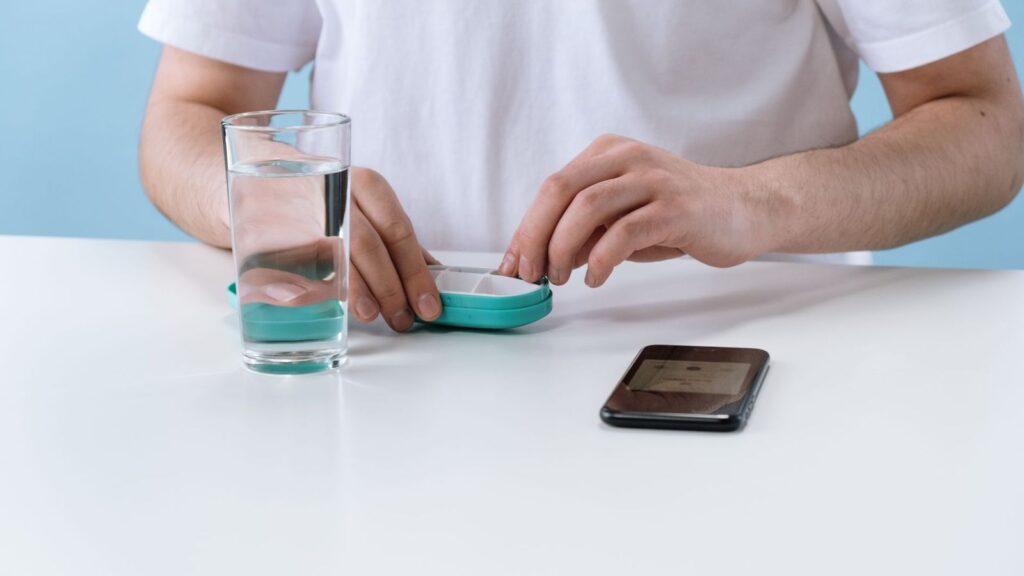
Take your doses at the same time each day, as your prescription says. Linking the dose to a daily habit, such as breakfast, makes it easier to remember.
- Set a daily phone alarm with a neutral label if you prefer privacy.
- Keep a few doses in your bag in case you stay out overnight.
- If you travel, keep tablets in your hand luggage and take the medical letter from your clinic.
If a dose is late, do not double the next one. Our hour-by-hour guide on what to do after a missed or late PEP dose explains exactly what to do.
Can you take PEP for less than 28 days?
You should not stop PEP early on your own. Stopping before day 28 may reduce the protection PEP can give, and there is no reliable way to know how much.
People consider stopping because of side effects, a partner’s negative test, travel or simply feeling well. Call your clinic first: a doctor can often solve the problem while you keep taking PEP.
Completing PEP vs stopping early
| Question | Completing all 28 days | Stopping early without advice |
|---|---|---|
| Protection | Best chance of PEP working | May reduce protection |
| Side effects | Can usually be managed | Problem not solved, only avoided |
| Doctor’s input | Follow-up planned | Risks not reviewed |
If side effects are the reason, read about common PEP side effects and how to manage them, then contact your clinic. Medicines can sometimes be changed. For how timing and adherence affect results, see how effective PEP is and what affects it.

PEP 28 days or 30: how many tablets should you take?
The course is 28 days, but the medicines used for PEP often come in packs of 30. That can leave you with a few tablets after the last day of your course.
Follow the number of days on your prescription, not the number of tablets in the box. If you have tablets left over, ask your clinic whether to keep them or return them, and never start leftover PEP on your own after a new exposure without speaking to a doctor.
What happens after 28 days of PEP?
When you take your final dose, the course is complete. From the next day, PEP no longer protects you, and it never covered any exposures that happen later.
Until your follow-up tests are negative, use condoms with partners. Day 28 is also a good moment to plan future prevention.
What to do on day 28: tests, PrEP or nothing more
| Your situation | Next step |
|---|---|
| A one-off exposure, unlikely to happen again | Follow-up HIV tests only |
| Exposures likely to happen again | Tests, then ask about PrEP |
| A new exposure during the course | Tell your clinic before the last dose |
| Missed doses during the course | Mention them when you book your tests |
| You also want an STI check | Book it with your HIV test |

Follow-up HIV testing after the 28-day course
Follow-up HIV tests are usually done at around 4–6 weeks and again at 3 months after the exposure, or on the schedule your clinic gives you.
Our article on HIV testing after PEP and what your results mean explains which tests are used and how to read the results. You can also book a confidential rapid HIV test in Bangkok, with results in about an hour, and add same-day STI testing in Bangkok at the same visit.
Moving from PEP to PrEP after day 28
If you are likely to have more exposures, PrEP can protect you before they happen instead of after. HIV.gov notes that people who may have repeat exposures can talk to their provider about moving to PrEP once the PEP course is complete.
PrEP is only started after a negative HIV test, because it is not a treatment for HIV. Our comparison of PEP vs PrEP and when to switch explains the difference, and our HIV PrEP service in Bangkok includes screening, a kidney check and a 30-day supply.

Support from our clinic during and after PEP
At HIV PEP Bangkok, you leave your first visit with the full 28-day supply, a medical letter for your own doctor and follow-up test reminders. We are open every day, 09:00–21:00, with English- and Thai-speaking doctors.
If you are travelling, our sexual health guide for travellers and expats in Bangkok covers practical tips for finishing your course on the move.
Frequently asked questions about the 28-day PEP course
Is the day I take my first dose counted as day 1?
Usually yes, the day of your first dose is day 1 of the course. Check the dates on your prescription or ask your clinic if you are unsure.
My PEP pack has 30 days of tablets. Do I take them all?
Follow the number of days on your prescription, which is normally 28. Ask your clinic what to do with any tablets left over.
Am I protected from HIV after I finish PEP?
No. PEP only acts on the exposure it was prescribed for and stops protecting you once the course ends. Use condoms or ask about PrEP for future protection.
What should I do if I run out of PEP before day 28?
Contact your clinic the same day so you can get more tablets without a long gap. Do not borrow medicines from someone else.
Can I finish my PEP course in another country?
Yes, as long as you take the full supply with you and keep taking it at the same time each day. Carry your medical letter in case you need help abroad.
If you have questions about your course, want to stop, or are reaching day 28, contact HIV PEP Bangkok by LINE, WhatsApp, phone or our clinic contact and booking form. For a medical emergency in Thailand, call 1669.